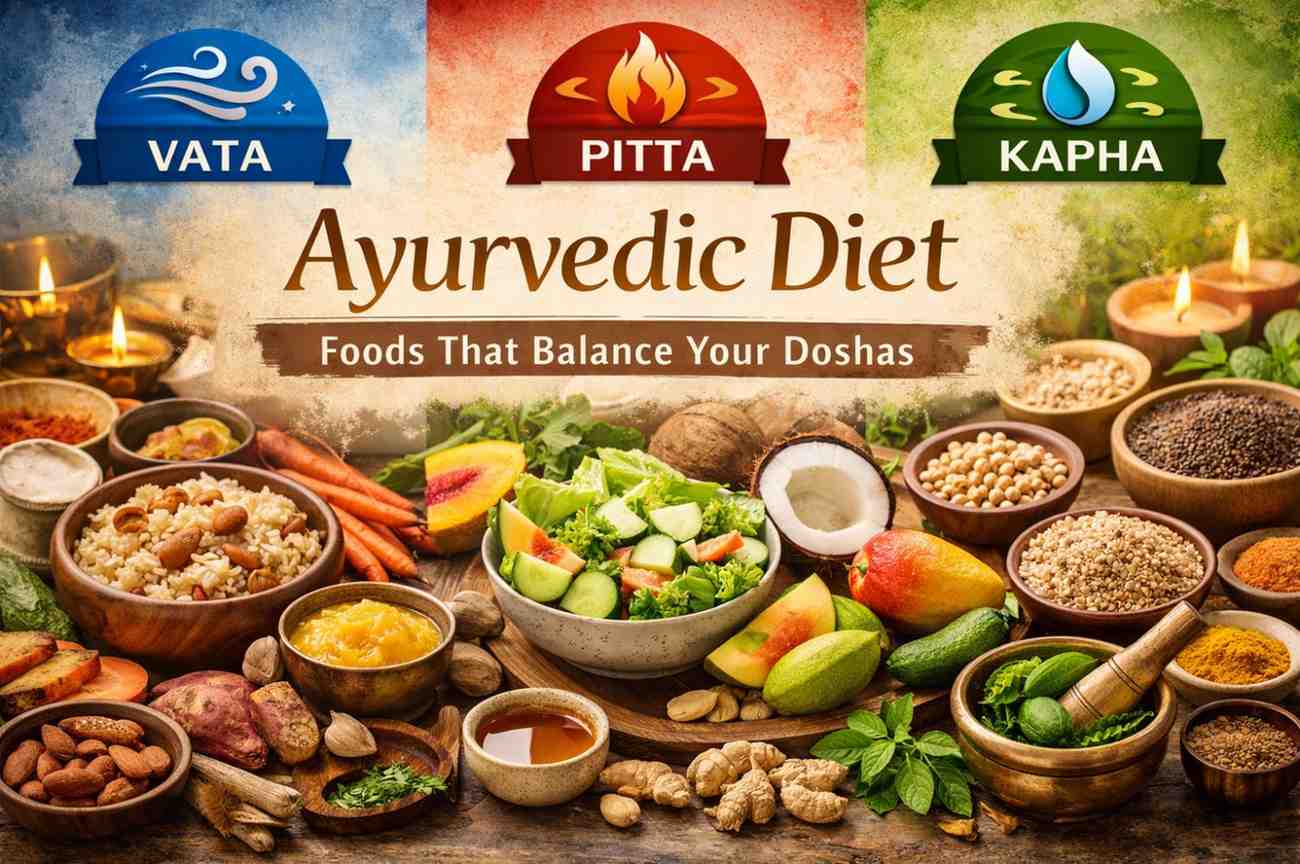
The Ayurvedic diet is one of the most powerful natural approaches to maintaining health and preventing disease. Rooted in the ancient science of Ayurveda, this dietary system focuses on balancing the body’s natural energies known as doshas.
Unlike modern diets that emphasize calories or macronutrients, Ayurveda focuses on individual constitution, digestion, and seasonal eating. By choosing foods that suit your dosha type, you can improve digestion, boost immunity, and maintain long-term wellness.
Today, the Ayurvedic diet is gaining global attention as more people look for natural ways to improve health and prevent lifestyle disorders.
Understanding the Ayurvedic Diet
The Ayurvedic diet is based on the principle that food is medicine. According to Ayurveda, every person has a unique body constitution made up of three biological energies:
- Vata
- Pitta
- Kapha
These doshas regulate physical and mental functions including digestion, metabolism, movement, and emotional balance.
When these energies are balanced, the body experiences optimal health. However, poor eating habits, stress, and environmental factors can disturb this balance.
The Ayurvedic diet helps restore harmony by selecting foods that reduce excess doshas and strengthen digestion.
Foods That Balance Vata Dosha
People dominated by Vata often have light and dry qualities. When Vata becomes excessive, symptoms such as anxiety, constipation, and poor sleep may occur.
Best Foods for Vata Balance
- Warm cooked grains like rice and oats
- Root vegetables such as carrots and sweet potatoes
- Healthy fats like ghee and sesame oil
- Warm soups and stews
- Nuts and seeds
- Herbal teas
Foods to Avoid
- Cold foods
- Raw salads
- Dry snacks
- Excess caffeine
Warm and nourishing foods help ground the body and calm the nervous system.
Foods That Balance Pitta Dosha
The Pitta dosha represents fire and metabolism. When Pitta becomes imbalanced, it can lead to acidity, inflammation, irritability, and skin problems.
Best Foods for Pitta Balance
- Cooling fruits like melons and pears
- Leafy green vegetables
- Coconut and coconut water
- Whole grains like barley and rice
- Fresh herbs such as coriander and fennel
Foods to Avoid
- Spicy foods
- Fried foods
- Excess salt
- Alcohol
Cooling foods help regulate digestion and reduce internal heat.
Foods That Balance Kapha Dosha
The Kapha dosha is associated with stability and structure. When Kapha is aggravated, it may cause weight gain, sluggish digestion, and fatigue.
Best Foods for Kapha Balance
- Light grains like quinoa and millet
- Steamed vegetables
- Lentils and legumes
- Spices such as ginger and turmeric
- Herbal teas
Foods to Avoid
- Heavy dairy products
- Sugary desserts
- Fried foods
- Processed foods
Light and stimulating foods help activate metabolism and reduce heaviness.
The Six Tastes in Ayurvedic Nutrition
Another important concept in the Ayurvedic diet is the six tastes that should ideally be present in meals:
- Sweet
- Sour
- Salty
- Bitter
- Pungent
- Astringent
Including these tastes ensures balanced nutrition and proper digestion.
Daily Eating Habits Recommended in Ayurveda
Ayurveda also focuses on how food is eaten.
Healthy Ayurvedic eating habits include:
- Eating fresh and warm meals
- Eating at regular times
- Avoiding overeating
- Eating in a calm environment
- Drinking warm water instead of cold beverages
These habits strengthen digestive fire, known as Agni, which is considered essential for overall health.
Benefits of Following an Ayurvedic Diet
Following an Ayurvedic diet can provide several long-term benefits:
- Improved digestion
- Better energy levels
- Stronger immunity
- Balanced metabolism
- Reduced stress and anxiety
Many wellness seekers travel to Ayurvedic wellness destinations such as Kerala to experience authentic Ayurvedic cuisine along with detox therapies and yoga practices.
Conclusion
The Ayurvedic diet offers a natural and sustainable approach to maintaining health. By understanding your dosha and choosing foods that balance it, you can support digestion, prevent disease, and maintain harmony between body and mind.
As the world increasingly turns toward holistic wellness, Ayurvedic nutrition continues to offer valuable insights for achieving long-lasting health.
For those looking to experience authentic Ayurveda and personalized dietary guidance, India Holistic Retreats offers carefully curated wellness retreats across India. These retreats combine traditional Ayurvedic nutrition, yoga, meditation, and therapeutic treatments to help restore balance and support long-term health.
Whether you are beginning your wellness journey or deepening your connection with Ayurveda, embracing the Ayurvedic diet can be a powerful step toward a healthier and more balanced life. 🌿
An Ayurvedic diet is a traditional nutrition system based on the principles of Ayurveda. It focuses on balancing the three doshas—Vata, Pitta, and Kapha—through natural foods, mindful eating habits, and seasonal ingredients to maintain overall health and digestion.
Your Ayurvedic dosha is determined by factors such as body type, digestion, personality, and lifestyle patterns. An experienced Ayurvedic practitioner can identify your dosha through consultation, pulse diagnosis, and health assessment.
Foods that balance Vata dosha are typically warm, nourishing, and grounding. These include cooked grains, root vegetables, healthy fats like ghee, warm milk, soups, nuts, and herbal teas. Avoid cold, dry, and raw foods that may aggravate Vata.
To balance Pitta dosha, Ayurveda recommends cooling foods such as fresh fruits, leafy vegetables, coconut, barley, rice, and herbs like coriander and fennel. Spicy, fried, and overly salty foods should be limited.
People with excess Kapha dosha benefit from light and stimulating foods such as lentils, steamed vegetables, whole grains like quinoa, and warming spices such as ginger and turmeric. Heavy, oily, and sugary foods should be avoided.
The Ayurvedic diet can support several aspects of health, including:
Improved digestion
Balanced metabolism
Increased energy levels
Stronger immunity
Reduced stress and inflammation
By aligning food choices with your body type, Ayurveda helps maintain long-term wellness.
Yes. The Ayurvedic diet focuses on strengthening Agni, or digestive fire. Eating fresh, warm foods, using digestive spices, and maintaining regular meal times can significantly improve digestion and nutrient absorption.
Many travelers visit Kerala, known for its authentic Ayurvedic traditions. Wellness platforms like India Holistic Retreats offer curated Ayurveda retreats where guests can experience personalized Ayurvedic diets, detox programs, yoga, and holistic therapies.